
Independence without the Brexit argument
The UK is still a long way from rejoining the EU, and there are plenty of things that could prevent it from happening. However, I think the Scottish independence movement needs to start thinking seriously about what it would mean if Britain did rejoin, perhaps at some point in the 2030s.
For the past decade, Brexit has been one of the strongest arguments for Scottish independence. Scotland voted overwhelmingly to remain in the EU, but was taken out against its wishes, and independence offered a way of reversing that decision. It’s an argument that remains perfectly valid today, and I certainly don’t think the SNP should stop making it.
However, what happens if the UK eventually rejoins? What will our arguments for independence be then?
Before the Brexit referendum, I remember a growing feeling that Westminster was becoming increasingly irrelevant. Many of the issues closest to people’s hearts, such as health, education and local government, were already decided in Edinburgh, while much of the legislation governing trade, the environment and economic regulation came from Brussels.
Of course, Westminster still controlled important matters, including defence, foreign affairs, immigration and much of taxation and social security. Nevertheless, it was possible to imagine a gradual process in which more powers moved to Edinburgh and Brussels, leaving Westminster with increasingly little to do.
In that context, independence seemed almost like the logical next step. Why should Scotland continue to be represented in Brussels by London, rather than taking its own seat at the table? Why shouldn’t we simply remove the increasingly unnecessary middle layer?
It also made independence seem less disruptive. Scotland would remain part of the European single market, the border with England would remain relatively open and much of the legislation governing everyday life would remain unchanged. Independence would primarily change who made the remaining decisions.
Brexit turned this argument upside down. Suddenly Westminster wasn’t becoming less important, but more so. It could remove Scotland from the EU against the wishes of Scottish voters, and the prospect of an independent Scotland rejoining the EU raised difficult questions about the border with England.
If the UK rejoins the EU, however, much of the old argument could return.
Back in 2016, I wrote about the four tribes of Scotland. I divided Scottish voters into four groups according to whether they supported independence and EU membership: the blue tribe wanted both, the yellow tribe wanted independence without the EU, the green tribe supported both the UK and the EU and the red tribe wanted neither Scottish independence nor EU membership.
The interesting thing was that the independence movement was essentially a coalition of blue and yellow voters, while the blue and green tribes had much in common when it came to Europe.
Brexit changed these dynamics considerably. For green voters who cared more about European integration than British unity, independence suddenly became much more attractive. On the other hand, the yellow tribe had to contemplate an independent Scotland rejoining an organisation they wanted to leave.
If the UK rejoins, some of this could change again. The blue-green voters who moved towards independence because of Brexit might reconsider, while the blue-yellow voters who primarily care about Scottish sovereignty might find themselves agreeing on more things again.
Of course, I don’t think everything would simply return to the situation before 2016. Brexit demonstrated rather dramatically that Scotland’s European future could be decided elsewhere, and rejoining wouldn’t erase that experience. Nevertheless, it would be foolish to assume that the political coalitions created by Brexit will necessarily survive its reversal.
There is also a rather awkward argument that unionists could make if the UK rejoins the EU.
After all, one of the principal justifications for holding a second independence referendum was that the terms and conditions of the 2014 vote had changed. Scotland had voted No when the UK was an EU member, and Brexit fundamentally altered the constitutional settlement that voters had chosen.
But if the UK rejoins the EU, a unionist could argue that we’re back to where we started. Scotland voted in 2014 to remain within the UK and the EU, and that arrangement has now been restored. Why should there be another referendum?
Of course, this overlooks the fact that Scotland would still have no guarantee that Westminster wouldn’t take it out of the EU again. However, I think the argument would be rather persuasive to some voters.
More importantly, it exposes a weakness in the SNP’s approach since 2016. By making Brexit the main justification for indyref2, the party has arguably helped establish the principle that another referendum requires an exceptional change of circumstances.
That wasn’t necessarily how Scottish self-determination was understood before 2014. As I argued back in 2018, there used to be a fairly widespread understanding that Scotland could choose independence through its elected representatives. However, Westminster’s refusal to authorise another referendum has gradually become accepted as a constitutional veto.
I still believe Nicola Sturgeon snatched defeat from the jaws of victory after Brexit. Scotland had voted overwhelmingly to remain in the EU, and the UK government was about to fundamentally change Scotland’s constitutional position against the wishes of Scottish voters. It was an extraordinary opportunity to demand either another independence referendum or a substantial transfer of powers to Edinburgh.
Of course, Westminster wasn’t going to agree willingly, and it would be unfair to pretend that Sturgeon could simply have forced Theresa May or Boris Johnson to concede. Nevertheless, I think the Scottish Government should have found a way to extract something from such an extraordinary constitutional crisis.
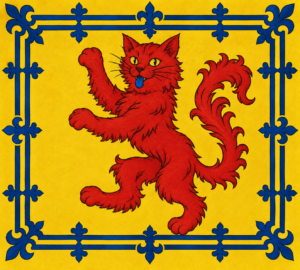
Instead, we ended up with neither independence nor significantly greater autonomy. The Scottish lion had been awakened by Brexit, but somehow Sturgeon managed to make it look like a lazy pussycat.
What particularly frustrates me is that the problem wasn’t a lack of arguments for independence, but the SNP’s failure to find a way out of the constitutional impasse. The party has never established a credible route to independence if Westminster simply refuses to cooperate.
And if the UK eventually rejoins the EU, the immediate grievance created by Brexit could largely disappear, while the constitutional veto remains firmly in place.
I don’t think the SNP should abandon the European argument now. The UK isn’t currently negotiating to rejoin the EU, and even if a future government decided to pursue membership, negotiations could take years and might fail altogether. There is no guarantee that the UK will ever rejoin, let alone on terms resembling its previous membership.
However, political parties need to plan for circumstances other than the ones they would prefer.
If the UK rejoins the EU in the 2030s, the independence movement will need to recover the older argument that Scotland should be a normal European country, like Denmark or Ireland, governing itself while cooperating closely with its neighbours.
We will need to explain why Scotland should have its own representation in Brussels, why decisions about Scottish taxation, immigration and social security should be made in Edinburgh and why the remaining functions of Westminster justify maintaining the Union.
But above all, we need to establish a credible constitutional path to independence that doesn’t depend on Westminster making some sufficiently outrageous decision to justify another referendum.
Otherwise, we risk finding ourselves in the 2030s with the same constitutional impasse we face today, but without Brexit to provide the justification for challenging it.
The SNP has already spent a decade failing to turn Brexit into constitutional change. It would be unfortunate if reversing Brexit allowed Westminster to turn that failure into a permanent settlement.